

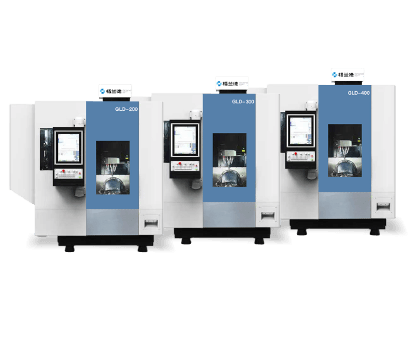






We deliver not just CNC machine tools, but also peace of mind and worry-free service.
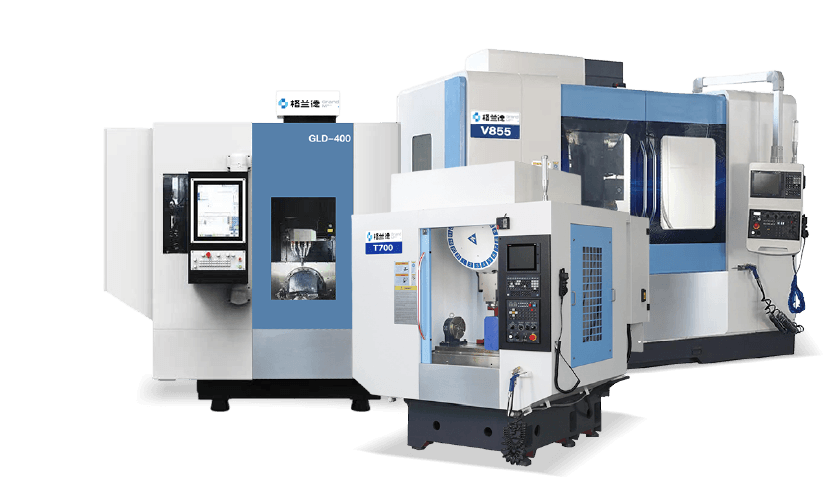

Every CNC machine tools made from Grand is produced in strict accordance with the ISO standard. During this process, a variety of quality management tests will be carried out. Our QC process is a rigorous system that spans the entire process of design, procurement, manufacturing, assembly, commissioning, inspection, and delivery, aiming to ensure that every machine tool meets the design specifications for accuracy, performance, and reliability. The specific process is as follows:


This is the first step in ensuring the basic quality of the machine tool. The specific inspection process is as follows:
Use a coordinate measuring machine to inspect key geometric dimensions, flatness, straightness, and hole position accuracy. Check the casting quality (for sand holes and cracks).
Conduct dynamic balancing tests, radial/axial runout tests, and temperature rise simulation tests.
Inspect straightness, pitch error, surface finish, and hardness.
Conduct power-on tests and functional tests, and compare the results with the inspection reports provided by the supplier.
Conduct motion tests and positioning accuracy tests.


Inspect the level adjustment of the machine bed. Check the quality of the scraping or bonding process of key mating surfaces (such as guide rail mounting surfaces), using the common dye penetration method to check contact points.
Before the installation of the spindle, lead screw, etc., preliminarily adjust the perpendicularity and parallelism of large components such as the machine bed, column, and saddle.


This is the most critical and comprehensive stage of the QC process, usually conducted according to international standards.
Testing the straightness, pitch, yaw, and roll of motion within the effective travel range of the X/Y/Z axes.
Such as the perpendicularity of the X-axis to the Y/Z axes, the perpendicularity of Z-axis movement to the worktable, and the perpendicularity of the spindle axis to the worktable.
Radial runout and axial runout of the spindle end, and radial runout of the spindle taper hole.
Testing the straightness, pitch, yaw, and roll of motion within the effective travel range of the X/Y/Z axes.
Such as the perpendicularity of the X-axis to the Y/Z axes, the perpendicularity of Z-axis movement to the worktable, and the perpendicularity of the spindle axis to the worktable.
Radial runout and axial runout of the spindle end, and radial runout of the spindle taper hole.
Testing the straightness, pitch, yaw, and roll of motion within the effective travel range of the X/Y/Z axes.
Such as the perpendicularity of the X-axis to the Y/Z axes, the perpendicularity of Z-axis movement to the worktable, and the perpendicularity of the spindle axis to the worktable.
Radial runout and axial runout of the spindle end, and radial runout of the spindle taper hole.
Testing the straightness, pitch, yaw, and roll of motion within the effective travel range of the X/Y/Z axes.
Such as the perpendicularity of the X-axis to the Y/Z axes, the perpendicularity of Z-axis movement to the worktable, and the perpendicularity of the spindle axis to the worktable.
Radial runout and axial runout of the spindle end, and radial runout of the spindle taper hole.
Testing the straightness, pitch, yaw, and roll of motion within the effective travel range of the X/Y/Z axes.
Such as the perpendicularity of the X-axis to the Y/Z axes, the perpendicularity of Z-axis movement to the worktable, and the perpendicularity of the spindle axis to the worktable.
Radial runout and axial runout of the spindle end, and radial runout of the spindle taper hole.
Testing the straightness, pitch, yaw, and roll of motion within the effective travel range of the X/Y/Z axes.
Such as the perpendicularity of the X-axis to the Y/Z axes, the perpendicularity of Z-axis movement to the worktable, and the perpendicularity of the spindle axis to the worktable.
Radial runout and axial runout of the spindle end, and radial runout of the spindle taper hole.


After completing all tests, the critical geometric and positional accuracies are re-verified to ensure all data are within the tolerance limits.
The machine tool is thoroughly cleaned, and exposed metal surfaces are treated with rust preventative.
The user manual, electrical diagrams, PLC program, accuracy inspection report, certificate of conformity, and other accompanying documents, as well as the standard tools and spare parts kit, are verified.


The customer inspects the appearance and accessories on-site to ensure they are in good condition.
Installation and leveling are performed according to requirements.
The manufacturer's engineer restores the factory accuracy on-site.
On-site at the customer's location, key accuracy and performance tests are repeated according to the acceptance criteria specified in the contract. The customer signs the acceptance report after confirming satisfactory results.

English

French

Portuguese

Spanish